







By KASS International
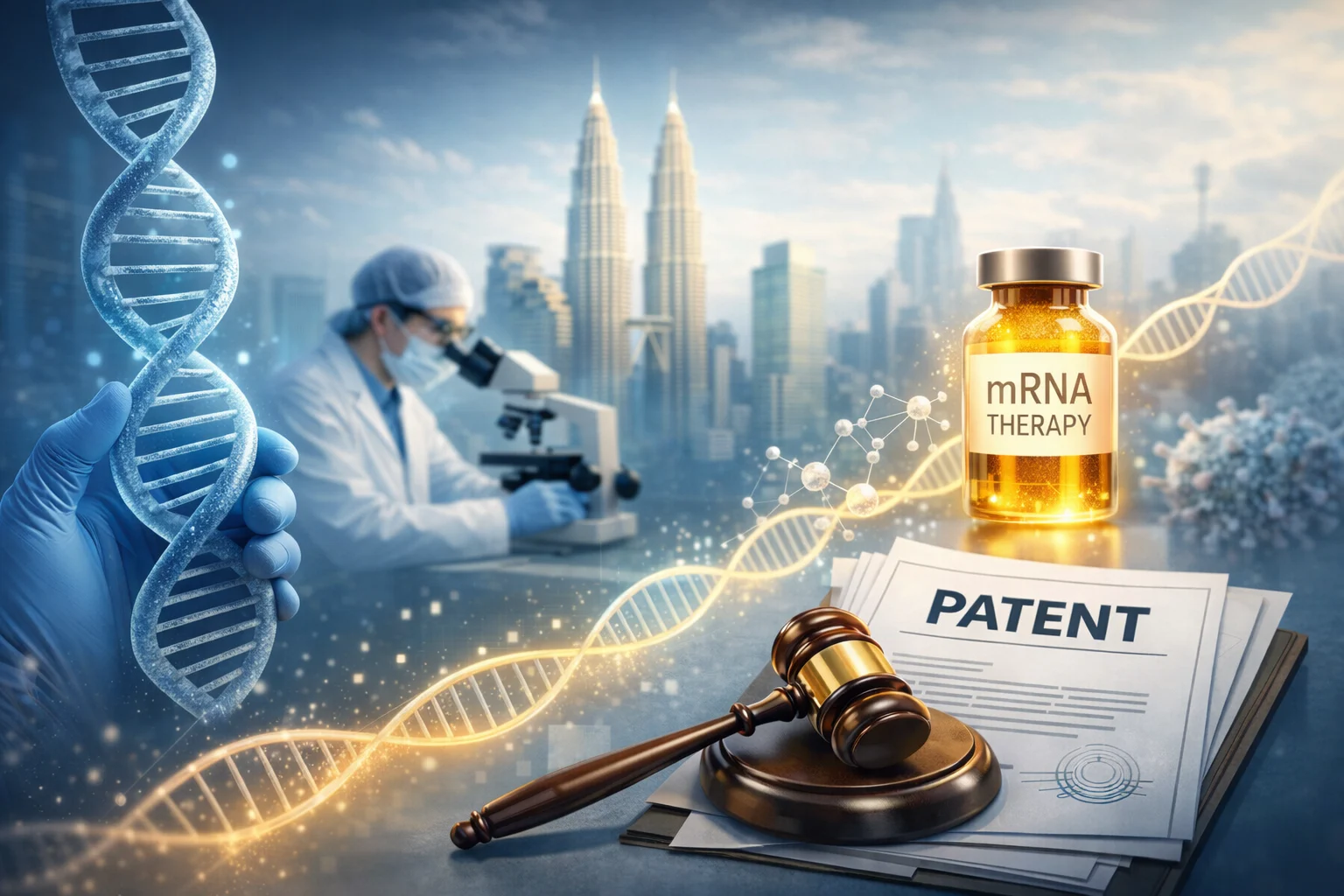
Biotechnology is no longer just the domain of white lab coats and research institutions. It has quietly, and then suddenly, become one of the most powerful engines of wealth creation in the 21st century. From gene-editing tools to personalised medicine, the biotechnology sector is attracting billions in investment, spawning unicorns, and fundamentally reshaping what it means to build a valuable company. But with great wealth comes great responsibility, particularly when it comes to protecting the intellectual property (IP) that underpins it all.
Key Takeaways
- Biotechnology is one of the fastest-growing wealth creation sectors globally, with the market projected to exceed USD 1.3 trillion and grow at over 13% annually.
- In biotechnology, intellectual property is the real asset — a single well-crafted patent can be worth hundreds of millions of dollars.
- Malaysia's first-to-file patent system means that delaying a filing, even by days, can cost a researcher or company the rights to their own invention.
- A strong biotech IP strategy goes beyond patents and should include trade secrets, licensing agreements, and a multi-jurisdictional protection plan from day one.
- Public disclosure of research before filing a patent application can permanently destroy IP rights, making it critical to file before presenting or publishing any findings.
Protect Your Innovation
The numbers speak for themselves
The global biotechnology market was valued at over USD 1.3 trillion in 2023 and is projected to grow at a compound annual growth rate of over 13% through the next decade. In Southeast Asia, governments are actively courting biotech investments. Malaysia’s National Biotechnology Policy has placed biotech at the centre of its economic transformation agenda, with the BioNexus programme attracting hundreds of companies and generating thousands of high-value jobs. It is no longer a stretch to say that the next Malaysian unicorn may well emerge from a laboratory.
What is driving this surge? A combination of factors: aging global populations demanding better healthcare solutions, the post-pandemic spotlight on biological sciences, the rapid cost reduction in DNA sequencing, and the emergence of transformative platform technologies such as CRISPR-Cas9, mRNA therapeutics, and synthetic biology.
IP is the currency of biotech value
Unlike in traditional industries, where value often lies in physical assets or brand recognition, the true currency of biotechnology is intellectual property. A single well-crafted patent can be worth hundreds of millions of dollars. A poorly protected invention, on the other hand, can be copied, commercialised, and monetised by a competitor before its original creator has a chance to profit.
This is not hypothetical. The long-running dispute between Jennifer Doudna’s team at UC Berkeley and Feng Zhang’s group at the Broad Institute over the ownership of CRISPR technology is a reminder of how high the stakes are. Both parties filed patent applications for what is arguably one of the most significant scientific discoveries of the past century, a gene-editing tool with applications ranging from curing hereditary diseases to developing drought-resistant crops. The patent battle that followed stretched across years and continents, and the financial implications were staggering.
The lesson for biotech entrepreneurs and researchers is clear: the race to the laboratory is only half the battle. The race to the patent office is equally, if not more, important.
What kinds of innovations are patentable in biotech?
Biotechnology is a rich field for patent protection. Broadly speaking, patentable inventions in this space include novel biological molecules such as proteins, antibodies, and nucleic acid sequences; methods of producing, isolating, or modifying such molecules; diagnostic tools and assays; drug delivery systems; and genetically modified organisms, among others.
However, the boundaries of what is patentable in biotech can be nuanced and jurisdiction-specific. In Malaysia, patent protection is available under the Patents Act 1983, which follows the first-to-file principle. This means that the first party to file a patent application, and not necessarily the first to make the discovery, will generally be granted the patent. For researchers and companies operating in this space, the implication is straightforward: do not delay filing.
It is also worth noting that naturally occurring substances, abstract scientific theories, and discoveries of what already exists in nature are generally not patentable on their own. The invention must demonstrate novelty, inventive step, and industrial applicability. A biotech company seeking to protect a new drug compound, for example, would need to demonstrate that the compound has been modified or applied in a manner that is new and non-obvious.
The commercialisation opportunity
Beyond patents, biotechnology companies can leverage a broader IP portfolio to create sustainable commercial advantage. Trade secrets play a critical role in protecting proprietary manufacturing processes, cell culture methods, and formulation know-how that may not be suitable for patenting. Licensing arrangements and collaborative research agreements, when properly structured, can also be powerful tools for extracting value from a company’s IP assets without the need to manufacture or commercialise a product directly.
The pharmaceutical and agrochemical industries have long understood this model. A molecule discovered in a Malaysian university laboratory could, with the right IP strategy, be licensed to a multinational corporation for hundreds of millions of ringgit. This is not wishful thinking. It is happening now, and it will happen increasingly as the biotech ecosystem in this region matures.
A word of caution
For all the excitement around biotech’s commercial potential, entrepreneurs and researchers would be wise to proceed with care. The regulatory environment for biotech products, particularly those involving genetic modification, human clinical trials, and biosafety, is complex and varies significantly across markets. IP protection in one jurisdiction does not automatically translate to protection elsewhere. A biotech company seeking to commercialise its product in the United States, Europe, and Asia will need a coordinated, multi-jurisdictional IP strategy from the outset.
Moreover, the biotech sector is not immune to IP theft, data misappropriation, and the risks that come with publishing research before filing for protection. Researchers eager to share their findings at conferences or in academic journals should ensure that patent applications are filed, or at least that provisional applications are in place, before any public disclosure.
Conclusion
Biotechnology is undeniably one of the most exciting frontiers for wealth creation today. But like any frontier, it rewards those who are prepared. The scientists who make the discoveries, the companies that commercialise them, and the investors who back them will all benefit, but only if the IP is properly identified, protected, and managed.
The petri dish may be where the discovery begins. But the patent office is where its value is secured.
Have a biotech innovation that needs protecting? KASS International has been advising researchers, startups, and multinational corporations on patent strategy across Southeast Asia since 1999. Reach out to our team at hello@kass.asia.